Nigeria Data Protection Law: Complete NDPA Compliance Guide 2025
Introduction to NDPA
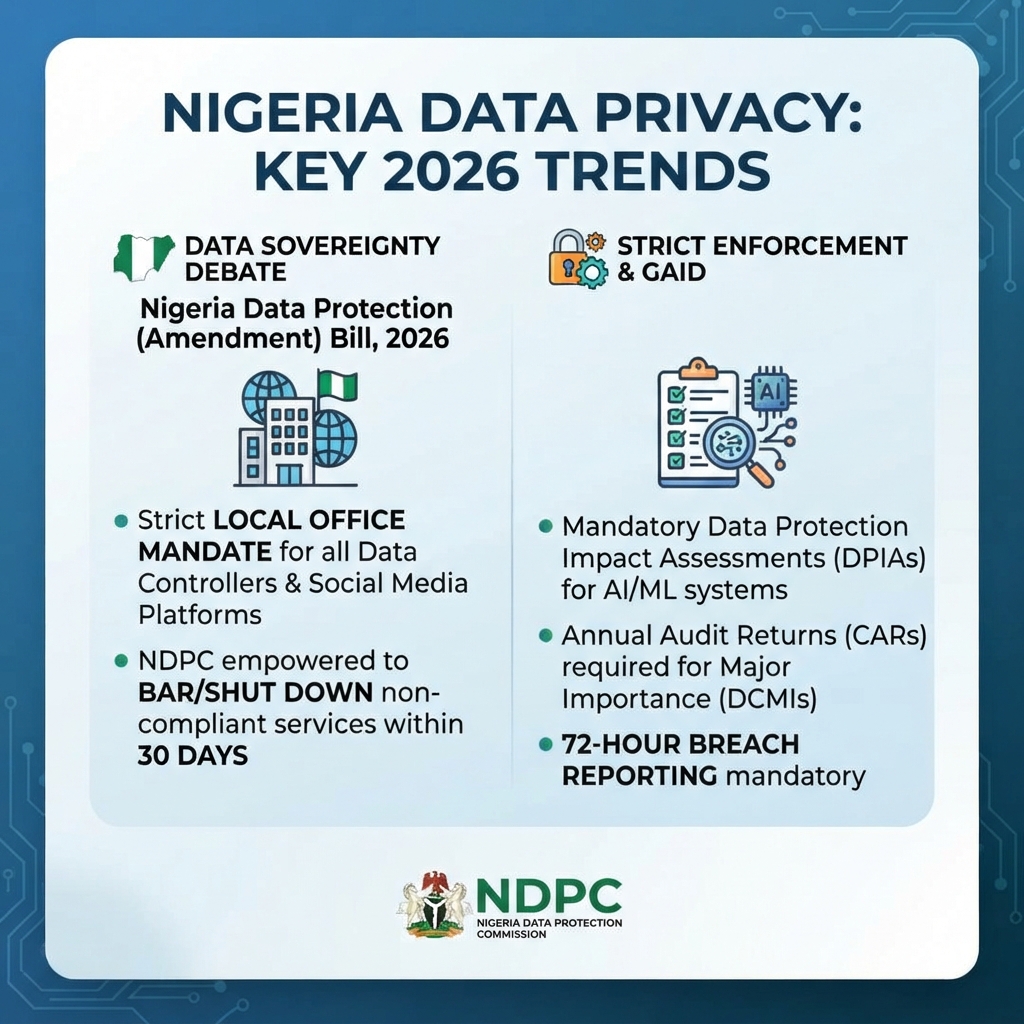
The Nigeria Data Protection Act (NDPA) 2023 is the primary legislation governing data protection in Nigeria, replacing the earlier Nigeria Data Protection Regulation (NDPR). The NDPA establishes comprehensive rules and standards for the collection, processing, storage, and transfer of personal data within Nigeria, with the goal of protecting the privacy rights of individuals.
Key Objectives of the NDPA
- Protect personal data privacy and security
- Regulate data processing activities by organizations
- Ensure accountability and transparency in data handling
- Establish the National Data Protection Authority (NDPA) as the regulatory body
- Promote data subjects’ rights including access, correction, and erasure of their data
- Facilitate lawful cross-border data transfers
Scope and Applicability
The NDPA applies to:
- All organizations (public and private) operating in Nigeria
- Data controllers and processors handling personal data of Nigerian residents
- Companies outside Nigeria processing Nigerian residents’ data for commercial purposes
Roles and Responsibilities
- Data Controller: Entity that determines the purpose and means of data processing
- Data Processor: Entity processing data on behalf of the controller
- Data Protection Officer (DPO): Appointed to ensure compliance with NDPA within organizations
- National Data Protection Authority (NDPA): Regulator responsible for enforcement, guidance, and monitoring compliance
Key Principles of NDPA Compliance
- Lawfulness, Fairness, and Transparency: Process data lawfully with clear communication to data subjects
- Purpose Limitation: Collect data only for specific, legitimate purposes
- Data Minimization: Limit data collection to what is necessary
- Accuracy: Ensure data is accurate and up-to-date
- Storage Limitation: Retain data only as long as necessary
- Integrity and Confidentiality: Protect data against unauthorized access or breaches
- Accountability: Demonstrate compliance through documentation and policies
Data Subject Rights Under NDPA
- Right to be informed about data collection and processing
- Right to access personal data
- Right to rectify inaccurate data
- Right to erase data (“right to be forgotten”)
- Right to restrict processing
- Right to data portability
- Right to object to processing
- Rights related to automated decision-making and profiling
NDPA Compliance Steps for Organizations
- Conduct Data Audit: Identify what personal data is collected, processed, and stored
- Appoint a Data Protection Officer (DPO): Ensure a qualified individual manages compliance efforts
- Develop Data Protection Policies: Create policies aligned with NDPA requirements
- Implement Privacy Notices and Consent Mechanisms: Inform data subjects and obtain valid consent
- Establish Data Security Measures: Use technical and organizational controls to protect data
- Train Staff: Educate employees about data protection responsibilities
- Set Up Data Subject Rights Processes: Enable handling requests for access, correction, or deletion
- Conduct Data Protection Impact Assessments (DPIA): For high-risk processing activities
- Register with the NDPA: Where required, submit necessary documentation and registrations
- Monitor and Review: Continuously assess compliance and update policies as needed
Penalties for Non-Compliance
Non-compliance with the NDPA can lead to significant penalties including:
- Fines up to ₦10 million or 2% of annual gross revenue
- Suspension or revocation of data processing activities
- Legal action and reputational damage
Cross-Border Data Transfers
The NDPA restricts transfer of personal data outside Nigeria unless:
- The recipient country provides adequate data protection
- Appropriate safeguards such as Standard Contractual Clauses (SCCs) are in place
- Explicit consent is obtained from data subjects
Compliance with the Nigeria Data Protection Act (NDPA) 2025 is essential for all organizations handling personal data in Nigeria. By understanding the requirements and implementing robust data protection frameworks, businesses can protect individuals’ privacy, avoid penalties, and build trust with customers and partners.
For detailed guidance, consulting legal experts specializing in Nigerian data protection law is highly recommended. Stay updated with NDPA announcements and regulatory updates through the official National Data Protection Authority website.