Introduction: Become a Certified DPO in Nigeria—2026 Roadmap
Nigeria’s data economy is accelerating, and organizations need accountable leadership to manage privacy risks and regulatory exposure. If you aim to lead that charge, planning your NDPC DPO training and certification in Nigeria for 2026 is a smart, timely move.
This roadmap outlines prerequisites, training pathways via NDPC-licensed DPCOs, core modules, assessments, and how to build verifiable experience. You’ll also learn how to maintain your credential with CPD credits and where the strongest career outcomes lie—from in-house DPO roles to outsourced, fractional engagements.
The focus is practical: exactly what you need to become a credible, independent Data Protection Officer under the Nigeria Data Protection Act (NDPA) 2023, with transferable skills rooted in global best practice.
Quick Summary: Prerequisites, Curriculum, and Timeline
- Prerequisites: Foundational knowledge of privacy or security, basic understanding of Nigerian commercial law, and hands-on exposure to IT, compliance, or risk is ideal.
- Training Providers: Prioritize NDPC-licensed DPCOs for Nigeria-specific law and practice, with optional international add-ons (e.g., GDPR comparatives).
- Curriculum: NDPA 2023, governance, ROPAs, DPIAs, DSARs, breach response, vendor risk, cross-border transfers, contracts, security controls.
- Assessment: Proctored exam, case study, and a practical portfolio (policies, DPIA, training pack, breach drill).
- Timeline: 8–16 weeks for training and assessment, plus 2–3 months of supervised practicum to evidence competency.
- Maintenance: Annual CPD credits, code of conduct, and periodic recertification.
Do You Need a DPO? Thresholds, Independence, and Reporting Lines
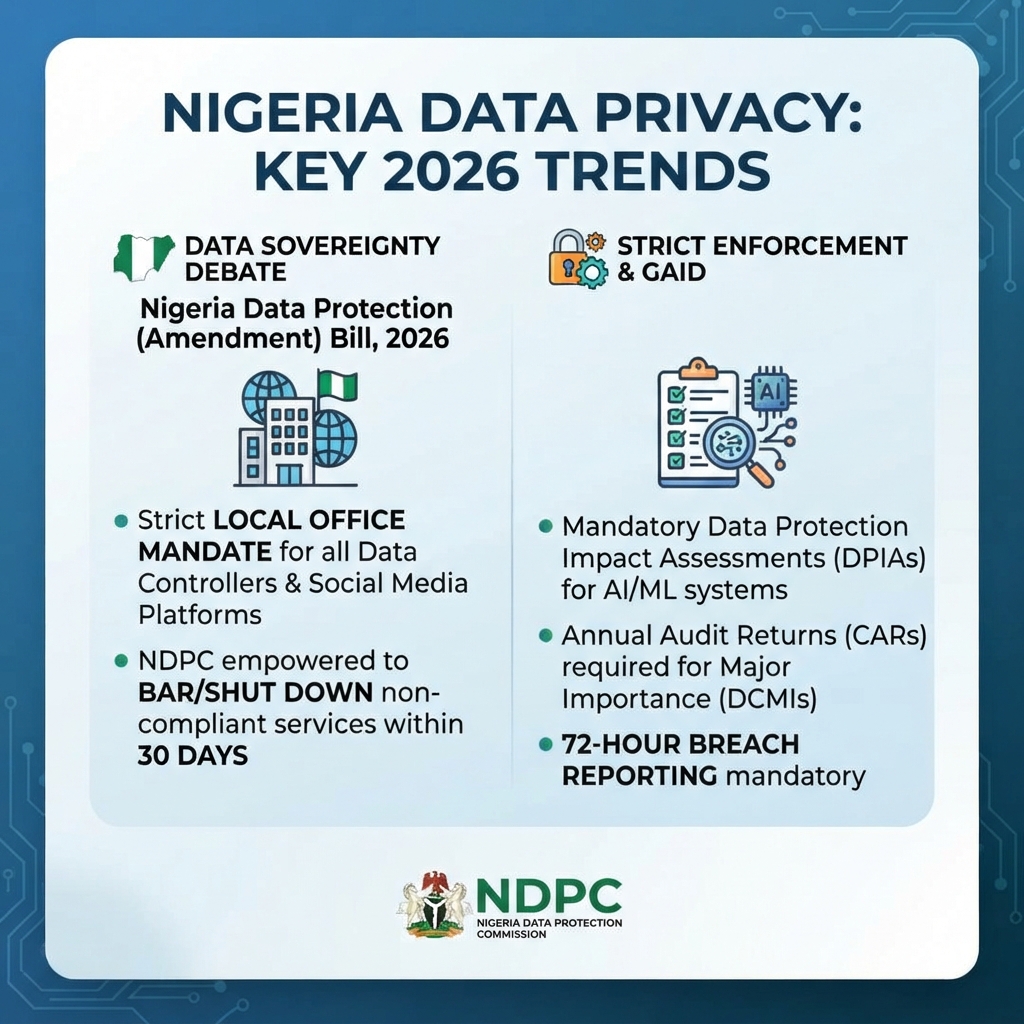
Under the NDPA, appoint a DPO when your processing is large scale, involves sensitive categories, requires regular and systematic monitoring, or where public functions are performed. High-risk sectors (finance, healthtech, telco, fintech, e-commerce, govtech) typically qualify.
Independence matters: the DPO must avoid conflicts of interest, have autonomy to advise and challenge, and report to the highest management level. See the general concept of a DPO in global contexts via Wikipedia and monitor local guidance at the Nigeria Data Protection Commission (NDPC).
Practical tests: If you run targeted advertising at scale, process biometrics/health data, operate a data-driven platform with millions of users, or serve as a major processor for controllers, you likely need a DPO.
Choose a Training Path: NDPC-Licensed DPCOs, Course Types, and Formats
For 2026, select a program delivered or endorsed by NDPC-licensed Data Protection Compliance Organizations (DPCOs). They align content to the NDPA and Nigerian enforcement trends while incorporating recognized international practices.
- Course Types: Foundation (privacy basics), Practitioner (operations, DPIAs, DSARs), and Advanced DPO (governance, audits, cross-border risk, board reporting).
- Formats: Instructor-led bootcamps (2–5 days), part-time evening cohorts (6–12 weeks), or self-paced online with live clinics. Hybrid delivery is common in Lagos and Abuja.
- Add-ons: Exam prep sessions, mock breaches, contract negotiation labs, and mentorship with practicing DPOs.
Ask providers about trainers’ real-world casework, placement support, and whether they include supervised practicums with local organizations.
Core Curriculum: NDPA, DPIAs, DSARs, Security, Contracts, and Transfers
- NDPA 2023 and Regulations: Key definitions, lawful bases, controller vs. processor, consent standards, rights of data subjects, enforcement powers.
- Records of Processing (ROPAs): Mapping systems, data flows, and third parties to evidence accountability.
- DPIAs: Risk screening, impact scoring, mitigations, and stakeholder consultation. Learn global framing from DPIA guidance.
- DSARs: Identity verification, response timelines, exemptions, redaction, and secure delivery workflows.
- Security by Design: Access control, encryption, incident detection, and alignment with ISO/IEC 27001 where relevant.
- Breach Response: Triage, containment, notification thresholds, and post-incident review.
- Third-Party & Contracts: Controller-processor clauses, audit rights, subprocessing, indemnities, and risk scoring.
- Cross-Border Transfers: Adequacy concepts, contractual safeguards, and transfer risk assessments tailored to Nigerian law and regional realities.
Assessment and Certification: Exams, Case Studies, and Practical Portfolios
Robust programs combine knowledge and practice. Expect a proctored exam (objective and scenario-based), a case study presenting a realistic Nigerian context, and a portfolio demonstrating operational capability.
- Exam: Multiple-choice and short-answer questions on NDPA, governance, DPIAs, DSARs, and breaches.
- Case Study: Draft a DPIA, risk register, and management briefing for a high-risk project (e.g., biometric onboarding).
- Portfolio: ROPA excerpts, a DSAR playbook, incident runbook, vendor due-diligence checklist, and training materials you delivered.
Request transparent pass marks, resit policies, and assessor credentials. Portfolios should be reviewed against objective rubrics and kept confidential.
Build Experience: Internal Projects, Audits, and Supervised Practicum
Certification opens doors, but verifiable experience secures trust. Pair your course with an internal project or a supervised practicum through a DPCO partner.
- Internal wins: Stand up a DSAR workflow, conduct a mini-DPIA, or remediate a consent pattern on your website or app.
- Audits: Lead a ROPA update and vendor risk review, then brief executives with prioritized actions and ROI estimates.
- Practicum: 4–8 weeks under supervision supporting a controller or processor, with structured feedback and sign-off.
Track outcomes in a logbook: objectives, metrics, artifacts produced, and management feedback—this becomes a compelling career asset.
Maintain Certification: CPD Credits, Renewals, and Community Involvement
Privacy evolves quickly. Maintain your credential with continuous professional development (CPD): webinars, conferences, research summaries, and hands-on labs.
- CPD targets: 15–30 hours per year, mixing legal updates, security practice, and leadership.
- Communities: Join local privacy meetups and international networks like the IAPP to benchmark and share lessons.
- Skills stacking: Add data governance, product management, or security certifications to broaden impact.
Leverage free resources from HubSpot Academy on communication and stakeholder training to enhance your internal influence.
Career Outcomes: Roles, Salary Ranges, and In-House vs Outsourced DPO
Certified DPOs in Nigeria are in demand across finance, telecoms, fintech, healthtech, e-commerce, and the public sector. Roles span Privacy Analyst, DPO, Head of Privacy, and Consultant/Virtual DPO.
- Indicative annual salaries (2026): Entry-level/Analyst: ₦3m–₦7m; Mid-level DPO: ₦8m–₦18m; Senior/Head: ₦20m–₦40m+ depending on sector, scope, and Lagos/Abuja market dynamics.
- Outsourced/Virtual DPO: Retainers often range ₦1m–₦5m+ per month for regulated or high-risk portfolios with defined SLAs.
- In-house vs outsourced: In-house suits data-led product companies; outsourced adds specialist depth and surge capacity, especially for SMEs.
For negotiation strategies and leadership framing, see business insights at Forbes.
Conclusion: Your Next Steps to DPO Certification in 2026
Define your 2026 plan now: shortlist NDPC-licensed DPCO programs, schedule an 8–16 week learning window, and secure a practicum or internal project for proof of competency.
Focus on mastery of NDPA, operational playbooks, and measurable risk reduction. Build a portfolio, track CPD, and join active privacy communities to stay current and visible.
The result is a credible, independent DPO profile trusted by executives and regulators—and ready for Nigeria’s next phase of digital growth.
FAQ: Eligibility, Duration, and Recognized Providers
Who is eligible for DPO training? Professionals in compliance, legal, IT/security, product, or audit. A year of related experience helps, but motivated beginners can enter via a foundation track.
How long does it take to certify? Typically 8–16 weeks for classes and assessment, plus 2–3 months to complete a supervised practicum and portfolio.
Are NDPC-licensed DPCOs mandatory? For Nigeria-specific credibility and alignment to enforcement, choose providers that are licensed DPCOs or partner closely with them. Check updates on NDPC’s website.
What does the exam cover? NDPA principles, DPIAs, DSARs, ROPA, breaches, vendor risk, and cross-border transfers—with Nigerian scenarios and case-based reasoning.
What learning format is best? Cohorts with live clinics accelerate feedback and networking; self-paced works if you add mentorship and a practicum.
Does the certification expire? Most credentials require annual CPD and periodic renewal. Keep artifacts and CPD logs updated for audits.