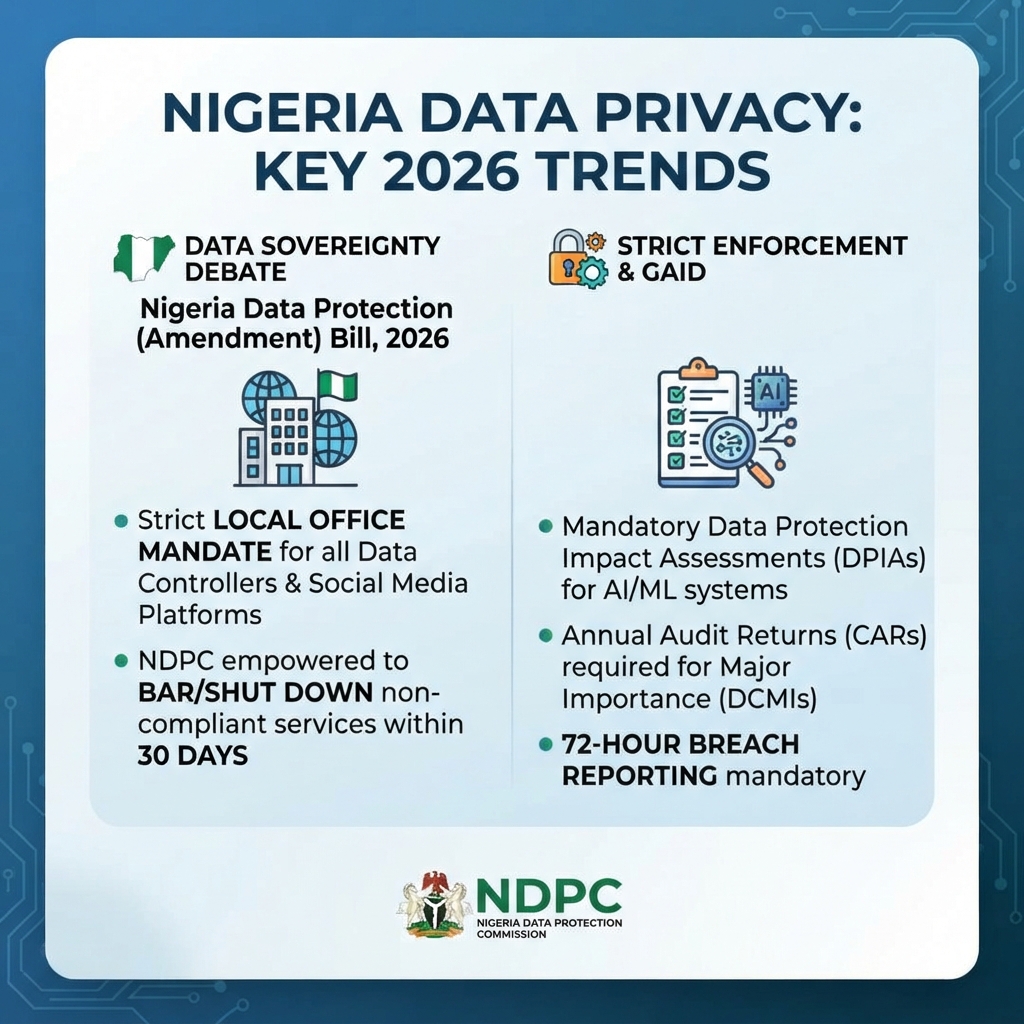
In business data protection compliance certificate is no longer just a regulatory formality—it is a mandatory license to do business. Across the globe, governments and major corporations are actively severing ties with third-party vendors, suppliers, and contractors who cannot prove their data protection compliance.
If your organization lacks a valid data protection registration certificate, you are effectively locked out of high-value business opportunities, public tenders, and corporate supply chains.
This shift is driven by strict statutory mandates designed to eliminate weak links in data security. Under modern privacy frameworks, outsourcing operations to an uncertified or non-compliant partner carries severe, multi-million-dollar legal and financial consequences for the hiring entity.
The Legal Frameworks Demanding Third-Party Compliance
Regulatory directives explicitly state that businesses and public institutions are legally accountable for the data handling practices of their vendors.
1. The Nigeria Data Protection Act (NDPA) 2023
In Nigeria, the NDPA 2023 fundamentally changed how corporate and public entities handle data. Under the Act, any organization acting as a “Data Controller” (the entity determining how data is used) must ensure that any “Data Processor” (the vendor or partner handling data on their behalf) provides sufficient guarantees of compliance.
The routinely issues directives mandating that public institutions, ministries, departments, agencies (MDAs), and private companies vet their service providers. Doing business with an unregistered vendor directly violates the Act, exposing the primary organization to regulatory sanctions and massive statutory fines. As a result, having a verifiable NDPC registration certificate has become an uncompromisable prerequisite for securing government contracts and corporate partnerships in Nigeria.
2. The General Data Protection Regulation (GDPR) – Article 28
On a global scale, Europe’s GDPR sets the gold standard for supply chain compliance. Article 28 of the GDPR explicitly prohibits companies from engaging a data processor unless the processor can provide sufficient guarantees that they implement appropriate technical and organizational measures.
If a multinational company or an exporter works with a local vendor that lacks a data protection certificate, the primary company faces fines of up to €20 million or 4% of their global annual turnover, whichever is higher. To mitigate this risk, global corporations completely blacklist any vendor that cannot produce verified compliance documentation.
3. Other Regional Guidelines and Directives
Similar strict provisions are mirrored across the continent and beyond:
* The Kenya Data Protection Act 2019: Mandates strict onboarding audits for all commercial agents and processors.
* The South Africa POPIA (Protection of Personal Information Act): Section 21 strictly requires written contracts ensuring that operators establish and maintain mandatory security safeguards.
The Domino Effect: How Non-Compliance Kills B2B Growth
When a government agency or a large enterprise prepares a public tender or onboarding questionnaire, data protection compliance is often the first filter applied. If you cannot provide a verifiable certificate registration number:
* Automated Disqualification: Your bid or proposal is dropped before it even reaches technical evaluation.
* Breach of Contract Risk: Existing corporate clients may abruptly terminate service-level agreements (SLAs) during routine annual audits to protect themselves from regulatory exposure.
* Losing to Compliant Competitors: Smaller, nimble businesses that have secured their compliance certificates are actively winning contracts over larger, established firms that have neglected their data protection registrations.
Guarding Against Fake Certifications
Because the demand for compliance certificates has skyrocketed, the market has seen an influx of counterfeit documents. Corporate legal departments and government procurement officers are now highly trained to vet these credentials.
As outlined in recent compliance warnings, any certificate lacking a QR code is flagged immediately as fraudulent. Procurement teams do not just look at the paper; they scan the QR code to ensure it links directly to an official government domain (like .gov.ng or .gov.uk) and dynamically pulls up matching entity details from the live regulatory registry. Trying to bypass procurement with a cosmetic or fake certificate can result in permanent blacklisting and criminal prosecution for fraud.