A major debate is currently trending in the data protection space regarding the controversial Nigeria Data Protection Amendment Bill.
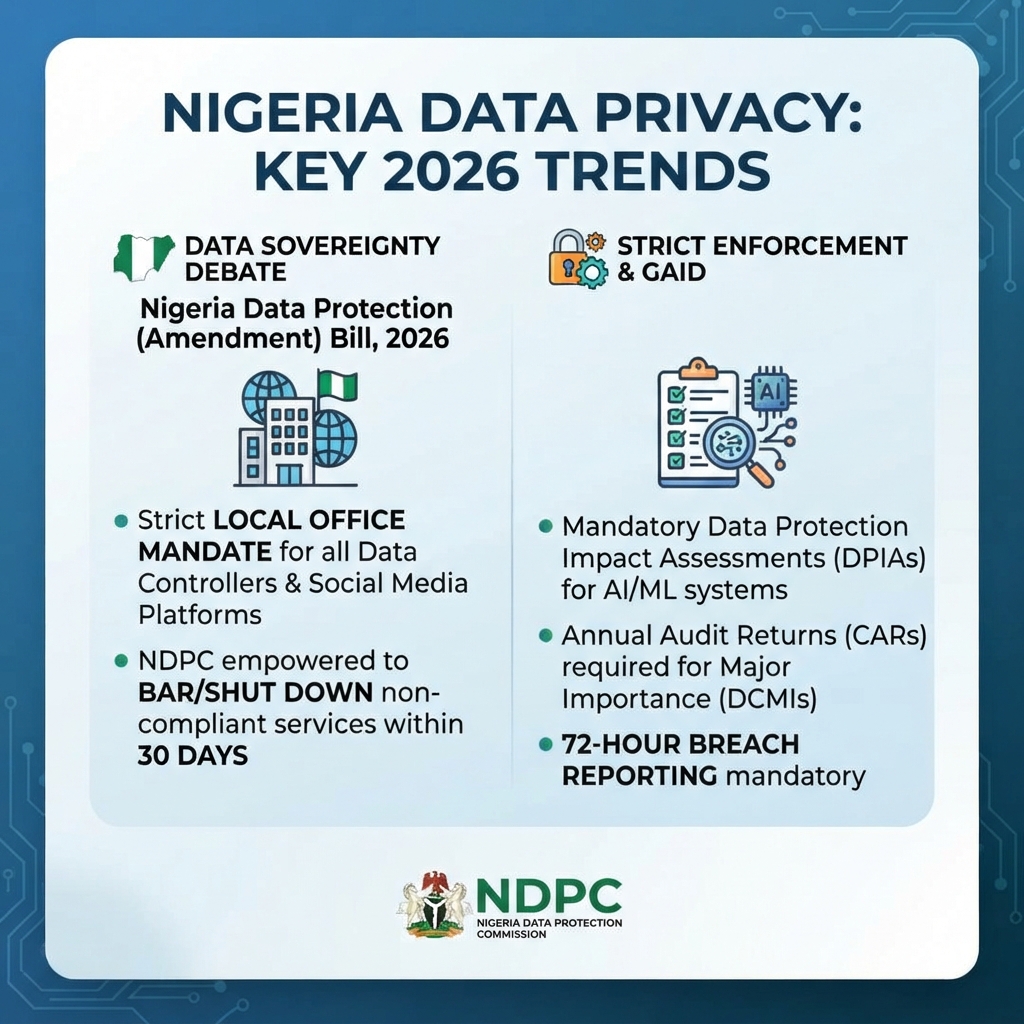
The proposed bill, sponsored by Senator Ned Nwoko, seeks to introduce strict adjustments to how international tech companies handle Nigerian user data. The most heavily searched aspect of this bill is a mandate requiring every social media platform, data controller, and data processor operating in Nigeria to establish a physical office within the country. Under the proposed terms, the Nigeria Data Protection Commission would be granted the statutory power to completely shut down or bar any non-compliant company within a strict 30-day window.
Senator Nwoko defends the amendment as a strategic step to secure Nigeria’s digital sovereignty and ensure global tech giants provide local investments, boost tax compliance, and create job opportunities. However, public interest has surged following a formal petition by the Socio-Economic Rights and Accountability Project urging the National Assembly to withdraw the bill. Digital rights advocates argue that the 30-day shutdown clause serves as a backdoor mechanism to expand government control over online expression and censor social media platforms.
Beyond the Nwoko bill, the National Assembly’s broader review of the primary Nigeria Data Protection Act addresses rapid advancements in artificial intelligence and escalating cyber threats. Parallel search trends show significant attention on concrete compliance updates affecting businesses operating within the country. Under the newly enforced General Application and Implementation Directive, organizations deploying machine-learning models or automated decision-making on Nigerian personal data must conduct mandatory Data Protection Impact Assessments.
Furthermore, the commission has drastically tightened compliance enforcement, requiring Data Controllers and Processors of Major Importance to submit their annual Compliance Audit Returns through licensed third-party compliance firms or face heavy statutory fines. Organizations are also now strictly required to report data privacy breaches to the regulatory body within a narrow 72-hour window. The ongoing friction between national security, economic localization, and the preservation of individual digital freedoms keeps Nigeria’s legislative changes at the top of regional search trends.
Nigeria Data Protection (Amendment) Bill, 2026: All you need to know.