Differences Between the Nigeria Data Protection Act and the GDPR
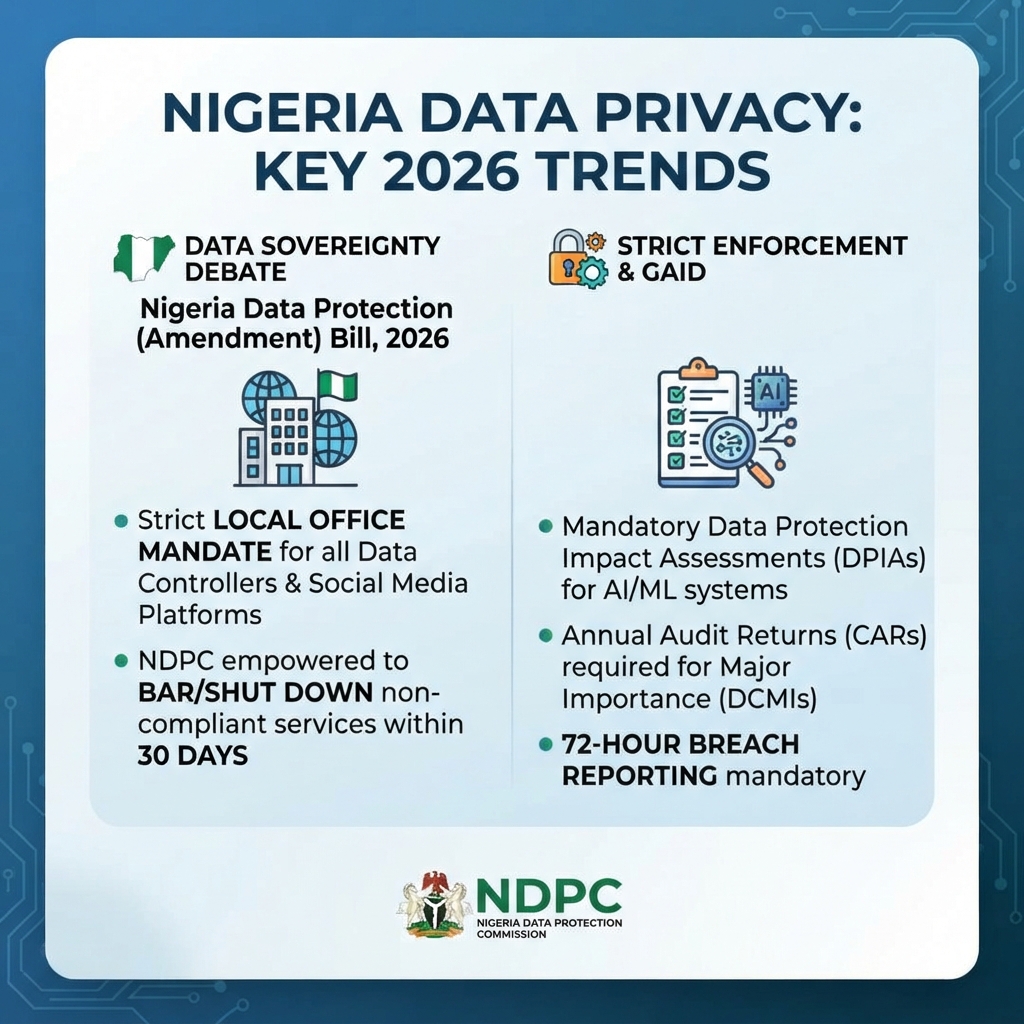
The Nigeria Data Protection Act (NDPA) and the General Data Protection Regulation (GDPR) are both legal frameworks designed to protect personal data, but they differ in scope, jurisdiction, and specific requirements.
- Jurisdiction and Scope
- NDPA: Applies specifically to Nigeria and governs the processing of personal data within Nigerian territory or by Nigerian organizations.
- GDPR: Applies across the European Union (EU) and to organizations outside the EU that process the personal data of EU residents.
- Legal Basis for Processing
- NDPA: Requires organizations to have a lawful basis for processing personal data, similar to GDPR but with some differences in the categories and application.
- GDPR: Provides detailed lawful bases for data processing, including consent, contract necessity, legal obligation, vital interests, public interest, and legitimate interests.
- Data Subject Rights
- NDPA: Grants data subjects rights such as access, correction, deletion, and objection to processing.
- GDPR: Offers broader rights, including data portability, the right to be forgotten, and enhanced transparency obligations.
- Data Protection Officer (DPO)
- NDPA: Requires certain organizations to appoint a Data Protection Officer, but the criteria are less detailed compared to GDPR.
- GDPR: Mandates DPO appointment for public authorities and organizations engaged in large scale processing of sensitive data.
- Penalties and Enforcement
- NDPA: Enforces penalties which can include fines and imprisonment but generally less severe than GDPR.
- GDPR: Imposes strict fines up to 20 million euros or 4% of global annual turnover, whichever is higher.
- Data Breach Notification
- NDPA: Requires notification to the NDPC but timelines are less explicitly defined.
- GDPR: Mandates breach notification to supervisory authorities within 72 hours and to affected individuals when there is a high risk.