Introduction: Report Incidents Correctly and On Time
When a personal data breach occurs, speed and accuracy matter. Organizations in Nigeria must assess, contain, and—when required—file data breach notification to the appropriate regulator. Doing this well demonstrates accountability, protects individuals, and reduces regulatory and reputational risk.
This guide explains how to file data breach notification NDPC Nigeria regulators expect, from triage through subject communication. It blends practical steps with compliance best practices to help you act within the expected 72-hour window and maintain evidence quality for any follow-up inquiries.
Use it as an operational checklist for your incident response team, privacy office, and executive stakeholders.
Quick Summary: When to Notify, What to Include, and How to Submit
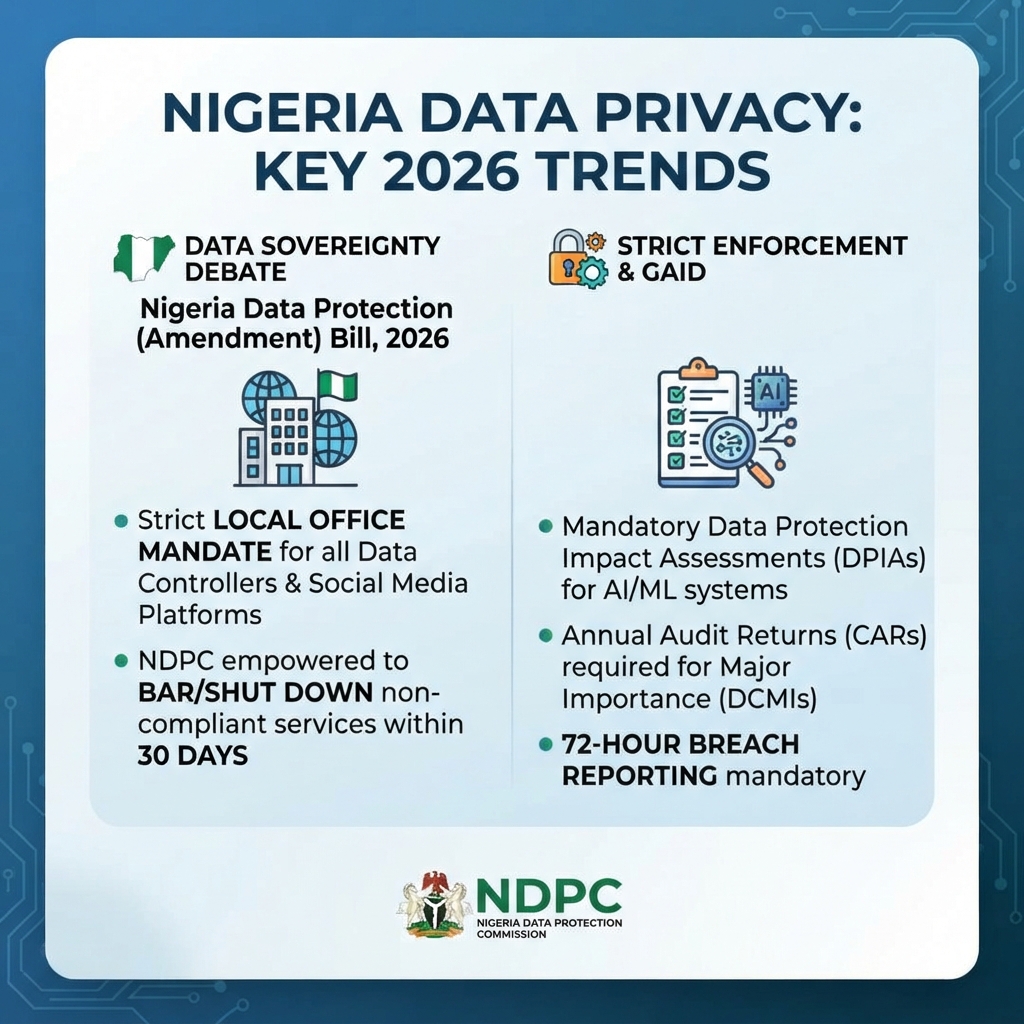
- When to notify: Report to the regulator within approximately 72 hours of becoming aware of a breach that poses a likely risk to individuals (e.g., identity theft, financial fraud, or discrimination). Notify affected data subjects without undue delay if the risk is high.
- What to include: Facts about the incident, discovery and containment timeline, categories/volume of data and data subjects, likely consequences, security measures applied (e.g., encryption), mitigations taken or planned, and a DPO/contact point.
- How to submit: Use the official NDPC portal’s breach form, attach supporting evidence (incident report, forensics summary, risk assessment, sample notices), and retain the acknowledgment/reference number.
If full details are not available at first submission, send an initial notification, then provide updates as investigations mature.
Triage the Incident: Containment, Forensics, and Risk Scoring
Begin with containment to prevent further unauthorized access or exfiltration. Preserve volatile data, isolate affected systems, rotate credentials, and enable enhanced logging.
- Forensics: Capture system images, collect logs, and document indicators of compromise. Maintain chain-of-custody to support potential legal proceedings.
- Root cause hypothesis: Phishing, credential stuffing, misconfiguration, vulnerable software, or third-party compromise.
- Risk scoring: Rate likelihood and impact considering data sensitivity, exposure duration, threat actor, and exploitability. Use recognized frameworks like Wikipedia: Data breach and concepts from incident management to structure activities.
Share interim findings with legal, privacy, and executive leads to align on notification decisions.
Determine Notifiability: Likely Risk to Individuals and Reporting Thresholds
Assess whether the breach is likely to result in risk to the rights and freedoms of individuals. Consider data categories (e.g., identifiers, financial data, health records), the number of affected people, exposure context, and whether safeguards reduce harm.
- Lower risk examples: Data encrypted with strong keys and no key exposure, or promptly recovered with compelling evidence of no access.
- Higher risk examples: Unencrypted financial credentials, government ID numbers, minors’ data, or confirmed malicious exfiltration.
- Special cases: Repeated incidents, vulnerable groups, or public disclosure elevate risk.
Document your risk analysis and rationale. If in doubt, consult counsel and lean toward transparency with the NDPC.
Prepare the Notification: Facts, Timelines, Impacted Data, and Mitigations
Assemble a concise, factual notification that avoids speculation while covering regulatory essentials. Keep paragraphs short and use clear language suitable for non-technical readers.
- Core facts: What happened, how it was discovered, and when it started/ended.
- Scope: Types of personal data, estimated records affected, systems and geographies involved.
- Risk and impacts: Potential consequences for individuals and your services.
- Mitigations: Containment, reset measures, monitoring, and support (credit monitoring, help desk).
- Contact: DPO or incident contact details for follow-up.
- Attachments: Forensic summary, risk assessment, evidence log, and draft/issued data subject notice.
Use plain language principles—see HubSpot: Crisis communication—to keep your message accessible.
Submit via the NDPC Portal: Forms, Attachments, and Acknowledgments
Access the official NDPC breach reporting portal and complete the required form. Ensure the information aligns with your internal incident record.
- Identity and contacts: Controller details, DPO/contact email and phone, and operating locations.
- Incident details: Narrative, dates/times (UTC/local), affected systems, categories of personal data and data subjects.
- Risk and remediation: Likely consequences, steps taken, and additional measures planned.
- Uploads: Incident report, forensic summary, risk matrix, evidence register, and sample subject notice.
- Acknowledgment: Save the confirmation page and reference number. Share it with legal, privacy, and executive sponsors.
If new facts emerge, submit a supplemental update to keep the regulator informed.
Notify Data Subjects When Required: Content, Channels, and Timing
When risk to individuals is high, notify affected people without undue delay. Use plain, actionable language and accessible channels.
- What to say: What happened, the types of data impacted, potential harms, steps you have taken, and what they should do now (e.g., password reset, vigilance for phishing, contact bank).
- Support: Provide hotlines, FAQs, and protections like credit monitoring if financial data is involved.
- Channels: Direct email/SMS, in-app messages, postal mail for hard-to-reach populations, and website notices if scale requires.
- Tone and clarity: Avoid technical jargon. Offer realistic timelines for follow-up updates.
Clear, empathetic notices can reduce confusion and reputational fallout—see Forbes: Restore trust after a breach.
Post-Incident Actions: Root Cause, Remediation, and Evidence Preservation
Beyond notifications, close the loop with robust corrective actions and documented evidence. This strengthens compliance and resilience.
- Root cause analysis: Validate hypotheses with forensic artifacts and logs. Capture lessons without blame-shifting.
- Remediation: Patch vulnerabilities, harden configurations, deploy MFA, and improve email/security awareness.
- Evidence management: Preserve images, logs, and communications with a clear chain-of-custody.
- Stakeholder briefings: Provide boards and regulators with clear, outcome-oriented updates.
Consider voluntary security assessments to demonstrate progress and reduce residual risk.
Lessons Learned: Update Policies, Vendors, and Controls
Turn findings into durable improvements across people, process, and technology. Treat vendors and third parties as part of your attack surface.
- Policies and playbooks: Refresh incident response, breach notification, and data retention policies. Align with recognized practices such as ISO 27035 and incident management basics.
- Vendors: Reassess due diligence, DPAs, security addenda, and monitoring. Require breach reporting SLAs and technical controls.
- Controls: Improve EDR, vulnerability management, zero trust, backup/restore drills, and phishing defenses.
- Training: Run role-based simulations for execs, IT, and customer support, including mock regulator and subject communications.
Track actions in a remediation register with owners, budgets, and deadlines.
Conclusion: Turn a Breach Into a Stronger Program
Incidents are inevitable, but chaos is optional. When you file data breach notification NDPC Nigeria expects—backed by solid triage, risk analysis, and clear communication—you protect people and your brand.
Use this guide as a repeatable playbook to meet deadlines, satisfy regulatory expectations, and harden your security posture for the next challenge.
This article is informational and not legal advice; consult qualified counsel for case-specific guidance.
FAQ: 72-Hour Window, Cross-Border Incidents, and Processor Duties
What is the 72-hour window? It’s the expected timeframe to notify the regulator after becoming aware of a personal data breach that is likely to risk individuals. If you cannot gather all details in time, submit an initial report and follow up with updates.
How do cross-border incidents affect notification? If affected individuals span multiple countries or data flows cross borders, coordinate with counsel to determine additional regulators and local timelines. Align facts across notices to ensure consistency, and consider the interplay with global regimes (compare with GDPR’s approach).
What are a processor’s duties? Processors must promptly inform the controller when they detect a breach, support investigations, provide evidence, and assist with notifications. Controllers remain responsible for regulatory filings unless otherwise agreed by law.
What if the incident turns out to be low risk? Keep a written record of your assessment and decision not to notify, including evidence and risk rationale, in case of future queries.