Introduction: Building a Practical NDPA Compliance Program for 2026
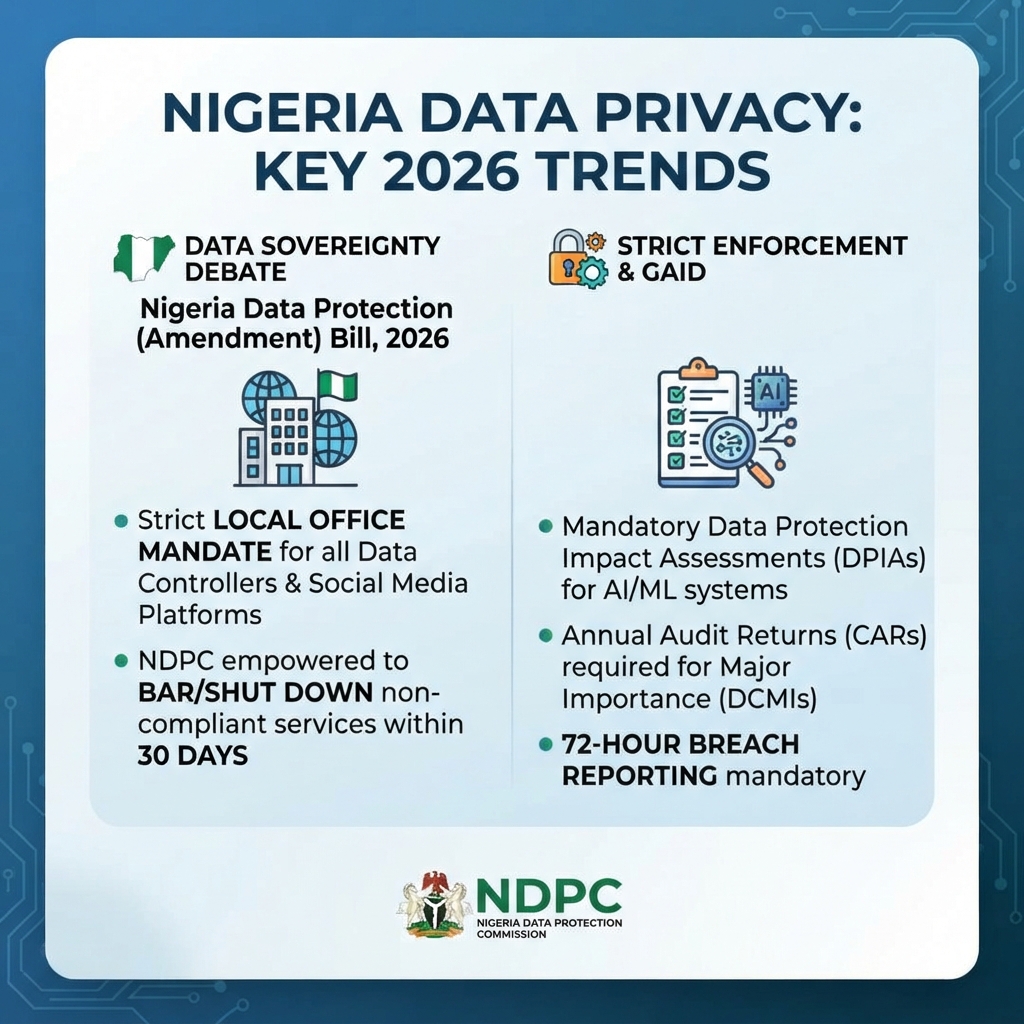
If you are planning how to comply with NDPA requirements in Nigeria, 2026 is the year to turn intent into structured execution. The Nigeria Data Protection Act (NDPA) expects organizations to demonstrate accountability, lawful processing, and robust security.
This guide turns legal obligations into a practical, phased compliance program. It blends governance, security, and operations so you can show evidence to the Nigeria Data Protection Commission (NDPC) while creating business value. For context on data protection concepts, see Data protection (Wikipedia) and the NDPC website at ndpc.gov.ng.
Quick Summary: A 10-Step Roadmap to Fast-Track NDPA Compliance
Use this proven sequence to accelerate compliance and reduce rework.
- Data mapping & RoPA: Catalogue personal data, systems, and purposes.
- Privacy notices: Publish clear, layered notices and lawful bases.
- DPIAs: Assess high-risk processing before you launch.
- Security controls: Implement technical and organizational measures.
- Incident response: Formal plan, drills, and breach reporting playbooks.
- Vendor risk: Contracts, due diligence, and continuous monitoring.
- DPO & governance: Define roles, independence, and reporting lines.
- Training: Role-based, measurable learning and simulations.
- Documentation: Policies, procedures, registers, and evidence.
- Monitoring: KPIs, internal audits, and board reporting.
2026 NDPA Roadmap: Phased Plan (0–3, 3–6, 6–12 Months)
Build momentum with time-boxed outcomes. Each phase ends with tangible evidence and stakeholder buy-in.
- 0–3 months: Appoint sponsor, form a privacy squad, complete discovery workshops, draft Records of Processing Activities (RoPA), identify lawful bases, publish/update privacy notices, and stand up an incident response team.
- 3–6 months: Run DPIAs on high-risk projects, implement priority security controls (MFA, encryption, backups, logging), execute vendor due diligence on critical third parties, and finalize the DPO appointment or service arrangement.
- 6–12 months: Close risk treatments, roll out role-based training, operationalize data subject rights (DSR) workflows, strengthen monitoring dashboards, and conduct an internal audit for audit readiness.
Data Mapping & Records of Processing (RoPA): Foundation for Compliance
Accurate data mapping underpins every NDPA control. Build a living inventory that shows what personal data you process, why, where, and for how long.
- Scope: Cover employee, customer, supplier, and marketing data; include special category and children’s data where applicable.
- Attributes: Purpose, lawful basis, categories, sources, retention, transfers, processors, security controls, and DSR touchpoints.
- Method: Run facilitated workshops, validate with system owners, and confirm with sample data traces.
- Outcome: A RoPA that links directly to privacy notices, DPIAs, and retention schedules—kept current via change management.
Privacy Notices & Lawful Basis Mapping: Getting Transparency Right
Transparency reduces complaints and builds trust. Align your notices to your RoPA and make them easy to navigate on web and mobile.
- Layered notices: Use summaries with links to details, including purposes, lawful bases, recipients, transfers, and rights.
- Lawful bases: Map processing to consent, contract, legal obligation, vital interests, public task, or legitimate interests as appropriate.
- Consent: Record consent signals, provide granular choices, and enable easy withdrawal.
- Resources: See practical guidance on crafting policies from HubSpot and general principles on Wikipedia.
DPIAs & Risk Management: When and How to Assess High-Risk Processing
Run a Data Protection Impact Assessment (DPIA) before initiating processing likely to be high risk, such as large-scale profiling, novel tech, or sensitive categories.
- Triggering criteria: Risk to individuals’ rights and freedoms, scale, sensitivity, automated decision-making, and monitoring activities.
- Process: Describe processing, assess necessity/proportionality, identify risks, and document mitigations and residual risk.
- Templates: Standardize questionnaires and scoring so teams can self-serve with DPO oversight.
- Learn more: UK ICO’s guidance on DPIAs is a helpful reference: ico.org.uk.
Security Controls & Incident Response: Technical and Organizational Measures
Robust security is essential to demonstrating accountability. Prioritize controls that reduce breach likelihood and impact.
- Core controls: MFA, least privilege, encryption in transit/at rest, vulnerability management, EDR, and secure software development.
- Frameworks: Align to ISO/IEC 27001 and use OWASP Top 10 to address application risks.
- Incident response: Build playbooks, conduct tabletop exercises, and define escalation and breach notification steps. See NIST SP 800-61.
- Evidence: Keep logs, tickets, and reports to prove monitoring, patching, and testing.
Third-Party/Vendor Management: Contracts, Due Diligence, and Monitoring
Vendors and cloud providers often handle critical data. NDPA accountability requires clear processor obligations and oversight.
- Due diligence: Assess data handling, sub-processors, locations, certifications, and incident history. Request practical evidence, not just policies.
- Contracts: Include processing instructions, confidentiality, security, breach notification, audit rights, and deletion/return on exit.
- Transfers: Document cross-border data flows and apply appropriate safeguards where required.
- Continuous monitoring: Risk-tier vendors, review annually, and track issues to closure. Use app security checks referencing the OWASP Top 10.
DPO Appointment & Governance: Roles, Independence, and Reporting Lines
Appoint a Data Protection Officer (DPO) when your processing activities justify dedicated oversight. Independence and authority are crucial.
- Positioning: The DPO should advise, monitor, train, and report on risks without conflicts of interest.
- Reporting lines: Provide direct access to the CEO/board and budget to act on findings.
- Resourcing: Use internal expertise or an external DPO-as-a-service to meet skills and capacity needs.
- Governance cadence: Establish a privacy steering committee, monthly risk reviews, and quarterly board updates.
Training, Awareness & Culture: Measurable, Role-Based Programs
People risk is persistent, so training must be targeted and measurable. Short, frequent learning beats annual checkbox courses.
- Role-based paths: Tailor content for marketing, HR, engineering, support, and leadership.
- Campaigns: Mix microlearning, phishing simulations, posters, and town halls to keep privacy top-of-mind.
- Metrics: Track completion, assessment scores, simulation failure rates, and reduction in data handling errors. See trends in human risk via Forbes Cybersecurity.
- Reinforcement: Tie training outcomes to performance goals and access to high-risk systems.
Documentation Pack & Audit Readiness: Policies, Templates, and Evidence
Documentation proves accountability. Maintain an organized repository with version control and ownership.
- Core policies: Data protection, information security, retention and disposal, acceptable use, incident response, vendor management.
- Registers: RoPA, DPIA log, risk register, vendor inventory, DSR log, and training records.
- Evidence: Screenshots, tickets, sign-offs, meeting minutes, and audit trails that show the program is operating.
- Audit playbook: Prepare scoping documents, walkthroughs, and sampling lists for efficient regulator or client assessments.
Conclusion: Sustain, Improve, and Monitor Your NDPA Program
Compliance is a living program, not a one-off project. Keep your RoPA current, measure outcomes, and close risks on predictable cycles.
To stay aligned with how to comply with NDPA requirements in Nigeria, refresh training, audit vendors, test incident response, and report privacy KPIs to leadership. Continuous improvement protects individuals and strengthens business resilience.
FAQ: NDPA Compliance Timelines, DPO Needs, and Sector Nuances
- How long does NDPA compliance take? Most organizations reach baseline maturity in 6–12 months with a focused roadmap, then iterate quarterly to improve.
- Do we need a DPO? Typically yes where core activities involve large-scale or high-risk processing. If in doubt, appoint a qualified internal lead or contract an external DPO.
- What about SMEs? Scale the same controls—fewer systems, but the same RoPA, notices, DPIAs, and security fundamentals.
- How do we handle data subject rights? Implement a tracked workflow with identity verification, routing to system owners, and deadlines. Test it quarterly.
- Cross-border data transfers? Document where data goes and apply appropriate safeguards. Confirm vendor locations and contractual protections.
- Marketing and cookies? Use consent where required, provide clear choices, and maintain records of consent signals across channels.
- Where can I learn more? Start with NDPC guidance and general resources like Wikipedia.