NIGERIA DATA PROTECTION ACT, 2023
Overview:
The Nigeria Data Protection Act, 2023 is a comprehensive legislation aimed at regulating the processing of personal data in Nigeria. The Act establishes a legal framework that ensures the protection of individuals’ privacy rights in the digital age, promotes responsible data handling practices, and enhances the security of personal information.
Key Provisions:
- Definitions:
- Personal Data: Any information relating to an identified or identifiable natural person.
- Data Processing: Any operation performed on personal data, including collection, storage, use, disclosure, and destruction.
- Data Controller: The entity that determines the purposes and means of processing personal data.
- Data Processor: An entity that processes personal data on behalf of the Data Controller.
- Scope:
- The Act applies to all data controllers and data processors operating within Nigeria, as well as entities outside Nigeria that process personal data of Nigerian residents.
- Lawful Processing:
- Personal data must be processed lawfully, fairly, and transparently.
- Processing requires the consent of the data subject, except in specific circumstances such as compliance with legal obligations or protection of vital interests.
- Data Subject Rights:
- Right to be informed about data collection and processing.
- Right to access their personal data.
- Right to rectification of inaccurate or incomplete data.
- Right to erasure or “right to be forgotten” under certain conditions.
- Right to restrict or object to processing.
- Right to data portability.
- Data Security:
- Data controllers and processors must implement appropriate technical and organizational measures to protect personal data against unauthorized access, loss, or damage.
- Data Breach Notification:
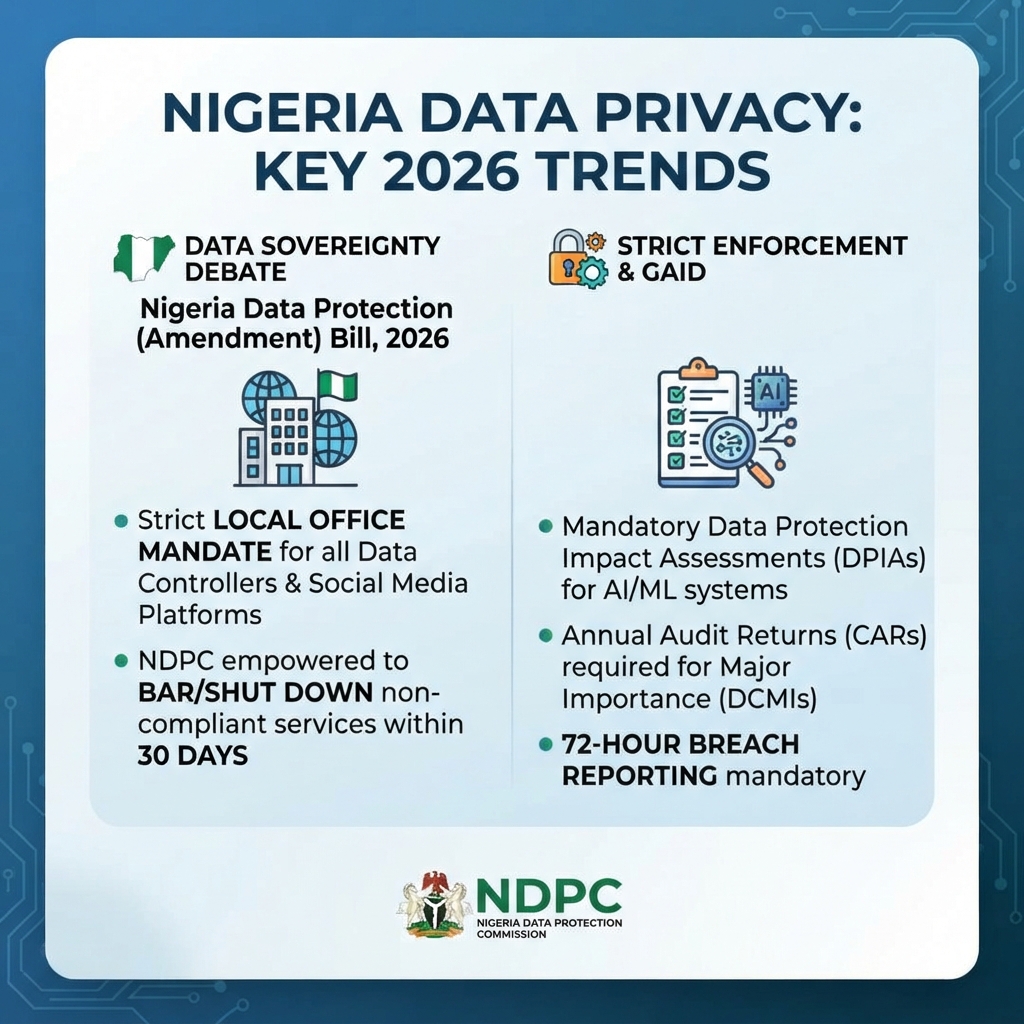
- In the event of a data breach, the data controller must notify the Nigeria Data Protection Commission (NDPC) and affected data subjects within a stipulated timeframe.
- Data Protection Officer (DPO):
- Certain organizations are required to appoint a DPO responsible for ensuring compliance with the Act.
- Cross-border Data Transfers:
- Personal data can only be transferred outside Nigeria if the destination country provides an adequate level of data protection or other safeguards are in place.
- Enforcement and Penalties:
- The NDPC is responsible for enforcement of the Act.
- Penalties for non-compliance include fines, sanctions, and possible imprisonment for severe violations.
Implications for Organizations:
Organizations operating in Nigeria must review and update their data protection policies and practices to comply with the Nigeria Data Protection Act, 2023. This includes obtaining valid consent, ensuring transparency with data subjects, securing personal data, and establishing procedures for breach notification.