The Remita Data Breach: A Massive Wake-up Call for African Fintech
In March 2026, a significant data breach involving a misconfigured Amazon S3 bucket reportedly exposed roughly 3TB of sensitive data, including KYC documents and financial keys, linked to the Nigerian fintech platform Remita. The incident, attributed to a “Public Read” configuration error, poses risks of identity theft and fraud for users, prompting calls for immediate password changes and API credential regeneration. For more details on the technical aspects of this breach, read the full analysis a
Remita, the cornerstone of the country’s electronic payment infrastructure, has reportedly suffered a catastrophic data breach. In late March 2026, cybersecurity watchdogs revealed that approximately 3 terabytes (3TB) of highly sensitive data ranging from government security keys to millions of personal KYC documents were exposed to the open internet.
The Anatomy of the Leak
The breach, attributed to a threat group known as ByteToBreach, did not require sophisticated hacking techniques. Instead, it was the result of a classic, avoidable error: a cloud misconfiguration. An Amazon S3 storage bucket was allegedly left in a “Public Read” state, effectively leaving the digital vault door wide open for anyone with the URL.
The leaked data is staggering in its depth:
- Identity Goldmine: Over 800GB of KYC (Know Your Customer) files, including passports, National Identification Numbers (NIN), and bank statements.
- Financial Infrastructure: Hardware Security Module (HSM) keys, which are the backbone of transaction encryption.
- Technical Blueprints: Millions of lines of source code and internal database exports containing tens of thousands of password hashes.
Systemic Risk
Because Remita is the primary gateway for the Nigerian government’s Treasury Single Account (TSA), the implications extend far beyond individual privacy. The exposure of security keys and technical architecture provides a roadmap for future, more targeted attacks against the nation’s financial heart.
The Path to Recovery
While Remita has moved to secure the misconfigured buckets and urged partners to reset API credentials and whitelist IP addresses, the damage to public trust is significant. This incident serves as a grim reminder that as fintech scales at breakneck speed, security cannot be treated as an afterthought.
For the millions of Nigerians whose data may now be in the hands of bad actors
Nigeriadataprotection. Advisory:
Rotate passwords immediately.
Reset API keys
Enable multi-factor authentication and monitor bank statements with extreme vigilance.
-
UPDATES | ADVISORY | COMPLIANCE | NEWS
Nigeria Data Protection (Amendment) Bill, 2026: All you need to know.
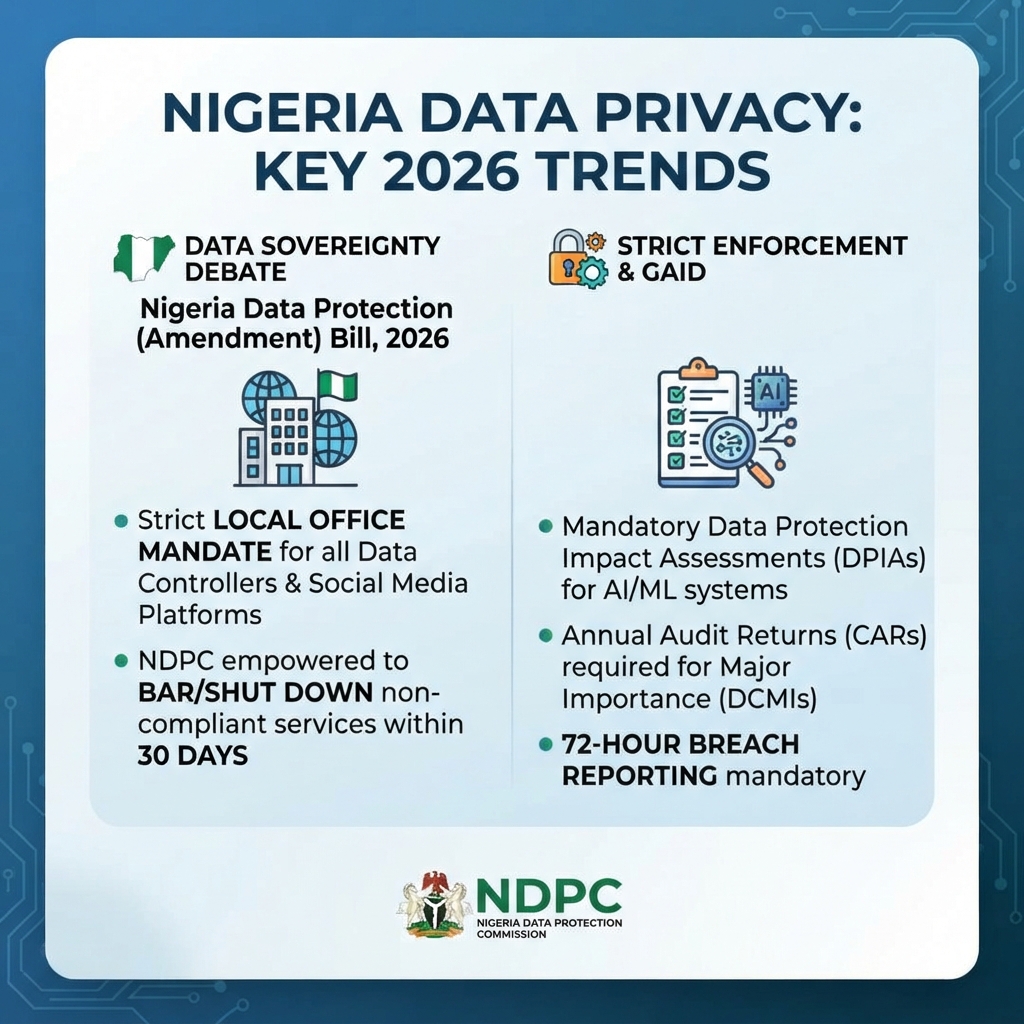
A major debate is currently trending in the data protection space regarding the controversial Nigeria Data Protection Amendment Bill. The proposed bill, sponsored by Senator Ned Nwoko, seeks to introduce strict adjustments to how international tech companies handle Nigerian user data. The most heavily searched aspect of this bill is a mandate requiring every social […]
-
EVENTS | INTERNATIONAL | NEWS | UPDATES
ISACA Honours NDPC for Distinguished Regulatory Leadership in Nigeria
The Nigeria Data Protection Commission has received the Industry Leader Regulator Recognition Award from the ISACA Lagos Chapter during its 30th-anniversary celebration in Lagos. The ISACA Lagos Chapter honored the commission for its distinguished leadership, resilience, and commitment to building a trusted digital ecosystem in Nigeria. Ms. Omoikhefe Ahimie, the commission’s Lagos Liaison Officer, received […]
-
ADVISORY | COMPLIANCE | NEWS
Why non-compliant Businesses Are Being Locked Out of Government and Corporate Contracts
In business data protection compliance certificate is no longer just a regulatory formality—it is a mandatory license to do business. Across the globe, governments and major corporations are actively severing ties with third-party vendors, suppliers, and contractors who cannot prove their data protection compliance. If your organization lacks a valid data protection registration certificate, you […]
-
Fake Compliance Scams Target Small Businesses: How to Verify Your Data Protection Status for Free
As regulatory bodies crack down on data privacy violations, a rising wave of predatory compliance scams is targeting small businesses, charities, and independent professionals across the country. Fraudulent actors, posing as official agents, are demanding exorbitant fees for “mandatory” data protection registration certificates—fees that many struggling organizations simply cannot afford in today’s harsh economic climate. […]
-
The Beginner’s Guide to Renewing Your NDPC Data Protection Registration under the NDPA 2023
If your business collects, stores, or processes the personal data of up to 200 or more Nigerians within a six-month period—whether it’s customer phone numbers, BVNs, email addresses, or employee payroll—you are legally classified as a data controller or data processor. Under the Nigeria Data Protection Act (NDPA) 2023, managing this data comes with strict […]
-
ADVISORY | COMPLIANCE | DATA BREACH | INTERNATIONAL | NEWS | UPDATES
Multiple Nigerian Communications Commission Web Servers Compromised by Threat Actors
The Nigerian Communications Commission (NCC) is facing a significant security incident following a cyberattack that successfully compromised at least two of its public-facing web servers. Threat actors breached the infrastructure hosting consumer.ncc.gov.ng (the NCC Consumer Affairs bureau portal) and csirt.ncc.gov.ng (the official portal for the NCC’s Computer Security Incident Response Team). The irony of the […]