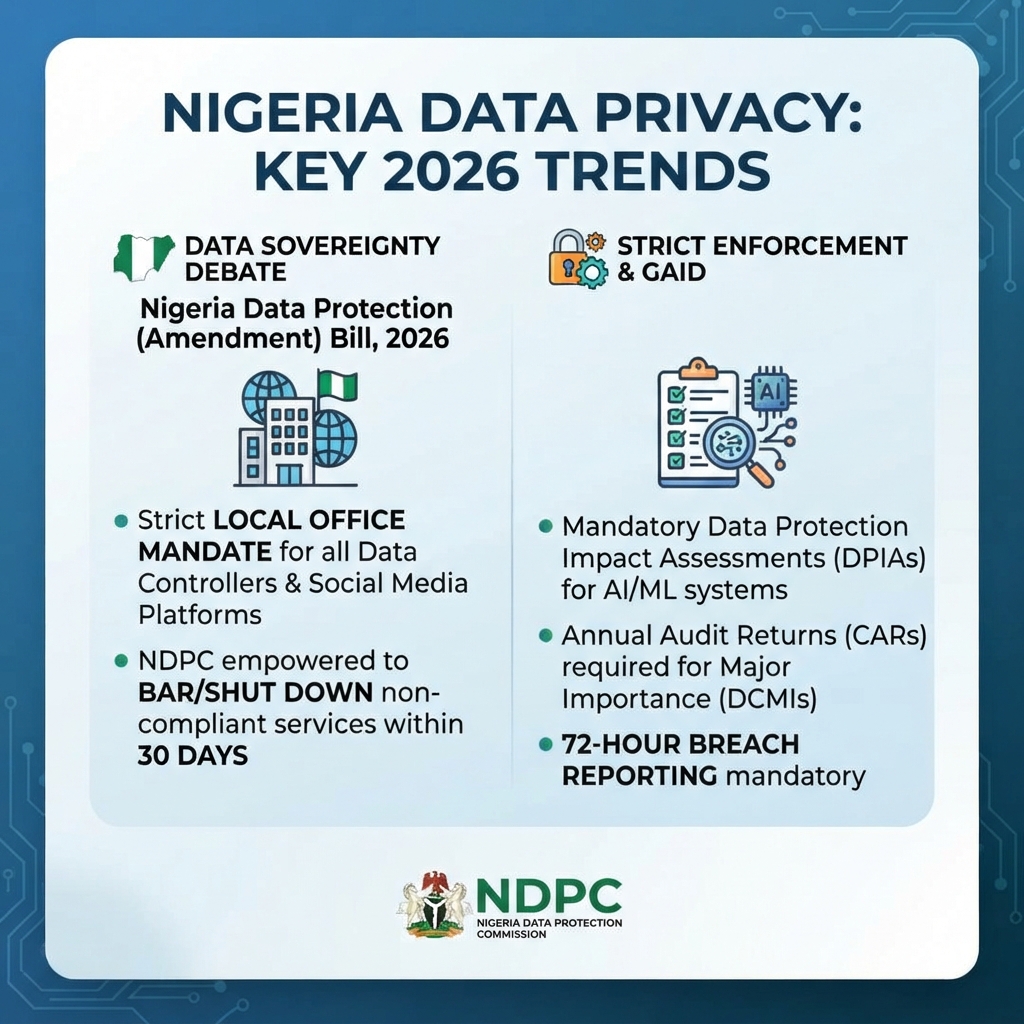
The modern global economy runs on data, and the legal structures built to protect it have become essential to national sovereignty and commercial trust. In Nigeria, the enactment of the Nigeria Data Protection Act 2023 was celebrated as a monumental milestone, providing a clear legal framework for a digital ecosystem that handles billions of transactions daily.
However, a regulatory decision by the Nigeria Data Protection Commission has sparked intense debate among tech policy analysts, legal scholars, and antitrust advocates. This decision is the licensing of the Institute of Information Management Africa as the sole, exclusive National Certification Body authorized to issue official data protection credentials in the country.
While the commission defends this move as a strategic step to standardize professional benchmarks and curb capital flight, establishing a state sanctioned private monopoly carries deep ramifications. To fully understand the impact of this policy, it must be evaluated across Nigeria regulatory, economic, legal, and international landscape.
Economic Ramifications: The Double Edged Sword of Market Control
From an economic perspective, granting an exclusive license to a single institution creates conflicting outcomes for Nigeria financial and professional landscapes.
On the positive side, this model assists with the retention of domestic capital. Historically, Nigerian IT and legal professionals seeking globally recognized credentials had to pay training and examination fees in foreign currency. In a market facing foreign exchange volatility and liquidity constraints, this model resulted in significant capital flight. By anchoring the official credentialing process within a local entity, the commission effectively ensures that educational expenditures remain within the domestic financial system. This strengthens local institutions and preserves foreign reserves.
Conversely, classical economic theory demonstrates that monopolies rarely favor the consumer. Without direct market competition, a sole provider faces little external pressure to lower certification costs, optimize user portals, or offer subsidized rates for students and early career professionals. While the Institute of Information Management Africa operates an Authorized Training Organisation framework, allowing third party computer schools and consultants to teach the curriculum, those schools must still funnel testing and certification fees back to a single entity. This top heavy structure can artificially inflate the cost of entering the profession, creating financial barriers for young Nigerians looking to break into the tech compliance space.
Institutional and Educational Capacity: Standardisation versus Bottlenecks
Building a workforce capable of safeguarding a nation of over two hundred million people requires a delicate balance between strict quality control and rapid scalability.
The case for uniformity is clear. Data protection law is intricate. Misinterpreting compliance standards can expose organizations to catastrophic data breaches and massive regulatory fines. By utilizing one primary certification engine, Nigeria guarantees that every certified Data Protection Officer passes through an identical testing apparatus and absorbs the exact same baseline interpretation of the legislation. This prevents a fragmented ecosystem where unverified training centers issue low quality credentials.
However, the risk of operational bottlenecks remains a major concern. A centralized system can create systemic vulnerabilities. If the sole provider faces technical downtime on its examination servers, management transitions, or administrative backlogs, the entire pipeline of professional talent nationwide grinds to a halt. In an aggressive digital growth phase, relying on a single institutional bottleneck can slow down the speed at which industries can legally appoint certified compliance officers.
Legal and Antitrust Ramifications: Navigating Market Dominance
The decision to award an exclusive credentialing mandate raises significant questions under Nigeria existing competition laws.
The Federal Competition and Consumer Protection Act was enacted to prevent anti competitive practices, combat monopolies, and protect fair market participation. While statutory regulators hold the legal mandate to oversee their sectors, creating an absolute monopoly for a single entity creates potential friction with the core philosophy of fair competition. If independent tech firms, local universities, or competing professional institutes feel systematically barred from entering the certification market, despite meeting necessary technical standards, it could invite legal challenges regarding fair competition and equal economic opportunity.
International Ramifications and Global Portability
Nigeria does not operate its digital economy in isolation. Cross border commerce, international cloud storage, and foreign direct investment rely heavily on global regulatory alignment.
A closed, monopolistic risk means that foreign nations may hesitate to recognize a localized, single source credential if their own international certification bodies are locked out of the market. Multinational corporations, such as global tech companies and international banks, often prefer standardized international frameworks like ISO standards. These organizations may view highly localized mandates as regulatory friction rather than progression.
An open, competitive target would instead focus on mutual recognition agreements where Nigerian certifications are valid globally, and international credentials are fully integrated locally. A blended approach would allow global tech players to smoothly transition local operations into compliance without redundant testing or unnecessary bureaucratic hurdles.
Conclusion: The Path Toward a Balanced Regulatory Maturity
The commission decision to license a sole National Certification Body is best understood as a phased pilot initiative rather than a permanent destination. During the initial rollout of a major national framework, strict centralization provides the regulator with the absolute control needed to establish standard blueprints, vet initial cohorts, and construct a domestic curriculum.
However, as Nigeria tech ecosystem matures, maintaining an exclusive monopoly risks stifling innovation, inflating costs, and inviting antitrust friction.
To achieve sustainable, long term growth, the commission should eventually evolve this model into a multi vendor accredited framework. Just as the Commission successfully licensed hundreds of diverse Data Protection Compliance Organisations to handle audits, it should eventually open the certification landscape to a select group of qualified federal universities and certified technical institutes. Embracing regulated competition will preserve quality control while driving down costs, fostering innovation, and positioning Nigeria as an agile, globally integrated leader in data privacy.