NDPA and NDPR Compliance Checklist for the Fintech Sector
- Data Inventory and Classification
Fintech companies must first conduct a comprehensive data inventory to identify and catalog all personal data they collect, process, store, or share. This includes customer information, transaction data, and any other sensitive data. Classification involves categorizing data based on sensitivity and regulatory requirements to ensure appropriate protection levels. - Lawful Basis for Data Processing
Under the NDPR, processing personal data must have a lawful basis. Fintech firms need to ensure that data processing activities are justified by consent, contractual necessity, legal obligations, or legitimate interest. Obtaining explicit, informed consent from data subjects where required is critical. - Data Subject Rights Management
The NDPR mandates that data subjects have rights such as access, correction, deletion, and data portability. Fintech companies must implement mechanisms to respond to data subject requests promptly and transparently, ensuring customers can control their personal information easily. - Privacy Notice and Transparency
Fintech firms must provide clear and accessible privacy notices explaining how personal data is collected, used, stored, and shared. Transparency builds trust and ensures compliance with NDPR’s requirement to inform data subjects about processing activities. - Data Protection Policies and Procedures
Developing and maintaining comprehensive data protection policies is essential. These policies should cover data handling, security measures, breach notification procedures, and employee responsibilities. Regular training ensures all staff understand their roles in protecting personal data. - Data Security Measures
Implement robust technical and organizational measures to safeguard data from unauthorized access, loss, or breaches. This includes encryption, access controls, regular security audits, and secure data storage solutions tailored to the fintech environment. - Data Breach Response Plan
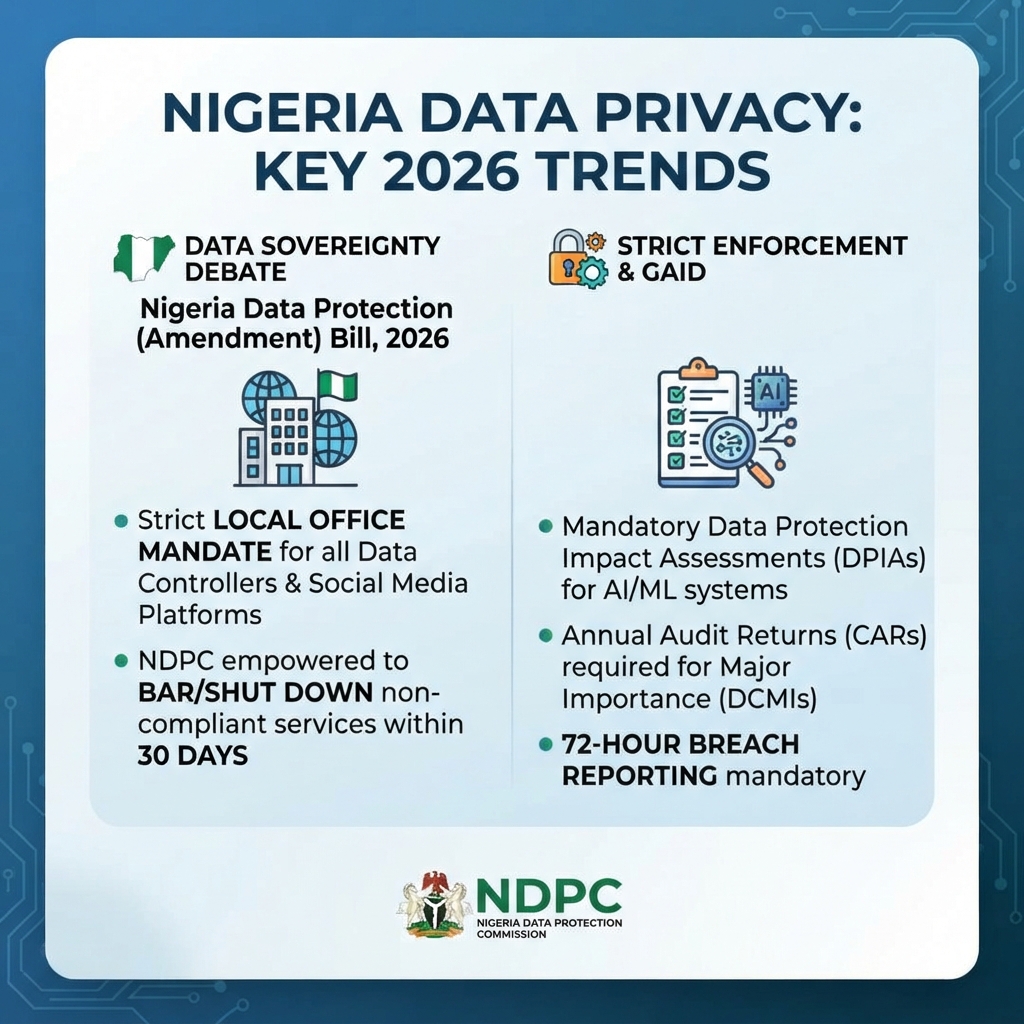
Fintech companies must establish a clear incident response plan for data breaches. This plan should include detection, containment, notification to the National Data Protection Commission (NDPC) within 72 hours, and communication to affected individuals when necessary. - Third-Party and Vendor Management
Since fintech firms often rely on third-party service providers, it’s crucial to ensure these vendors also comply with NDPR requirements. Contracts should include data protection clauses and provisions for audits and monitoring. - Data Retention and Disposal
Data should not be kept longer than necessary. Fintech companies must define retention periods aligned with legal and business needs and ensure secure disposal or anonymization of data once it is no longer required. - Appointment of a Data Protection Officer (DPO)
Depending on the scale and nature of data processing, fintech companies should appoint a DPO to oversee compliance, serve as a liaison with the NDPC, and provide guidance on data protection matters.
Consequences of Non-Compliance and NDPC Enforcement
Failure to comply with the NDPR can lead to severe consequences. The National Data Protection Commission (NDPC) has the authority to investigate complaints, conduct audits, and enforce penalties. Penalties for non-compliance include fines of up to 2% of annual gross revenue or 10 million Naira (whichever is greater), public reprimands, orders to cease data processing activities, and possible imprisonment for certain offenses.
The NDPC may also require organizations to take corrective actions such as improving security measures, notifying affected data subjects, or deleting unlawfully processed data. Non-compliance can damage a fintech company’s reputation, erode customer trust, and result in legal actions from affected individuals.
To avoid these consequences, fintech companies must prioritize NDPA and NDPR compliance as a core part of their operations, proactively manage data protection risks, and maintain an open dialogue with the NDPC.