NDPA and NDPR Compliance Checklist for the Media Sector
- Data Mapping and Inventory
Media organizations must identify and document all personal data they collect, process, store, and share. This includes data from employees, customers, subscribers, and online users. Understanding where data resides and how it flows within the organization is essential for effective data protection and compliance with NDPA (Nigeria Data Protection Act) and NDPR (Nigeria Data Protection Regulation). - Lawful Basis for Processing Data
The media sector must ensure that all personal data processing activities have a lawful basis as stipulated under the NDPA and NDPR. This could be the consent of the data subject, legitimate interest, contractual necessity, or compliance with a legal obligation. Consent must be freely given, specific, informed, and unambiguous, especially when collecting data for marketing or profiling purposes. - Data Subject Rights
Media companies need to establish procedures to uphold the rights of data subjects including the right to access, rectify, erase, restrict processing, and object to processing of their personal data. They must also ensure that data subjects can easily exercise these rights through clear communication channels. - Data Protection Policies and Procedures
There must be clear policies and procedures outlining how personal data is managed, protected, and processed within the media organization. These should cover data handling, breach response, data retention, and disposal. Regular reviews and updates to these policies are necessary to ensure ongoing compliance. - Data Security Measures
Adequate technical and organizational security measures must be implemented to protect personal data against unauthorized access, loss, theft, or damage. This includes encryption, secure storage, access controls, and staff training on data protection best practices. - Data Breach Notification
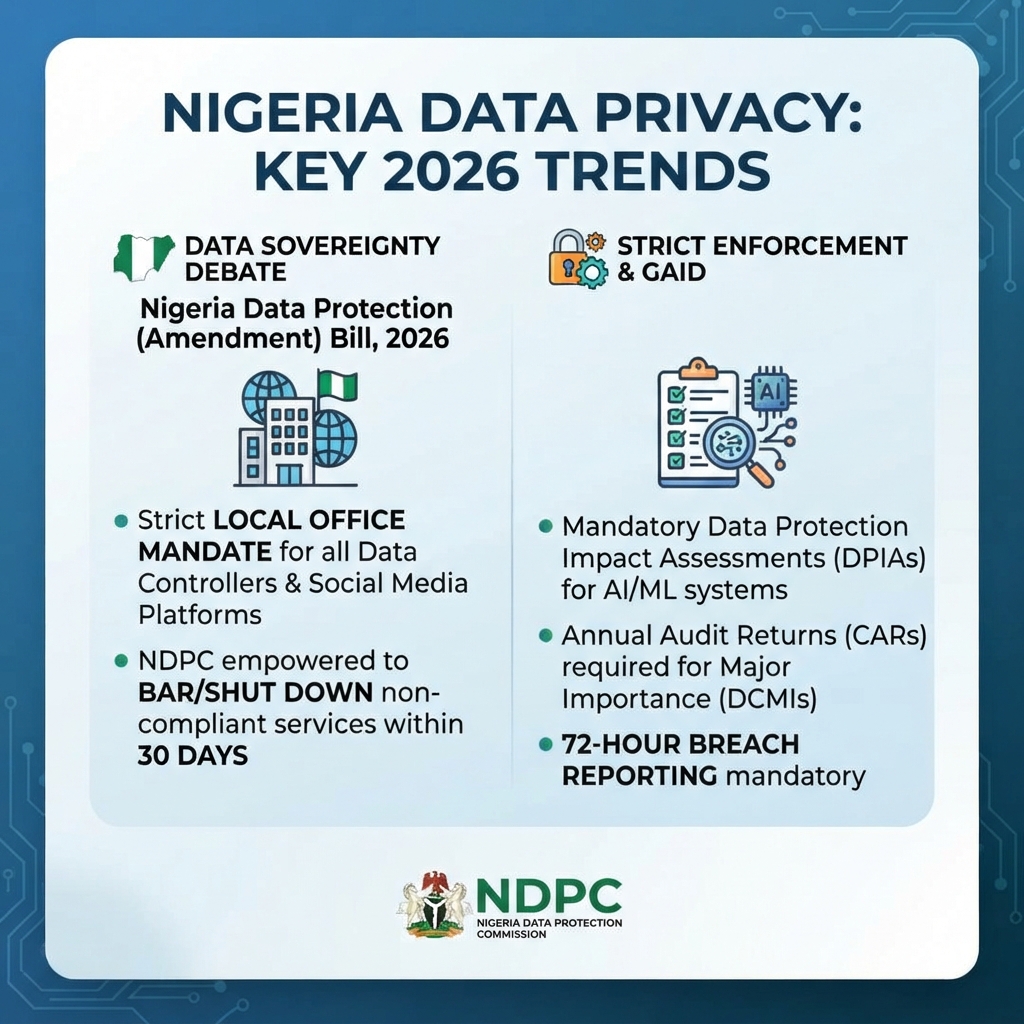
Media organizations are required to have a data breach response plan. In the event of a breach involving personal data, they must notify the Nigeria Data Protection Commission (NDPC) within 72 hours and inform affected data subjects where there is a high risk to their rights and freedoms. - Third-Party Data Processors
If the media company uses third-party service providers that process personal data on their behalf, they must ensure that these processors comply with NDPA and NDPR requirements. This includes having data processing agreements in place that specify security measures and compliance obligations. - Data Protection Officer (DPO) Appointment
Depending on the size and nature of data processing, the media organization may be required to appoint a Data Protection Officer to oversee compliance efforts, conduct audits, and serve as a point of contact for data subjects and the NDPC. - Data Minimization and Retention
Only the minimum necessary personal data should be collected and processed for specific purposes. Additionally, personal data should not be retained longer than necessary; clear retention schedules must be established and adhered to. - Employee Training and Awareness
All staff involved in data handling must receive regular training on NDPA and NDPR requirements, data protection principles, and the organization’s specific policies and procedures. This helps reduce risks of non-compliance due to human error.
Consequences of Non-Compliance
Failure to comply with the NDPA and NDPR can lead to severe penalties imposed by the Nigeria Data Protection Commission (NDPC). These consequences include:
- Administrative fines which can be up to 10 million Naira or 2% of the organization’s annual gross revenue, whichever is higher.
- Enforcement actions such as orders to cease data processing activities or suspension of data processing systems.
- Reputational damage resulting from public disclosure of non-compliance or data breaches.
- Legal actions initiated by data subjects for violations of their data protection rights, potentially leading to compensation claims.
Actions by NDPC on Non-Compliance
When the NDPC identifies non-compliance, it may undertake several actions:
- Conduct investigations and audits of the media organization’s data processing activities.
- Issue warnings or directives to remedy compliance gaps within a specified timeframe.
- Impose administrative fines and sanctions for serious breaches or repeated violations.
- Require the appointment of a Data Protection Compliance Officer if one is not already appointed.
- Publicize enforcement actions to encourage compliance across the industry.
Adhering to the NDPA and NDPR is critical for the media sector to protect personal data, maintain public trust, and avoid penalties. A proactive approach to compliance ensures that media organizations operate within the law and uphold the privacy rights of individuals.