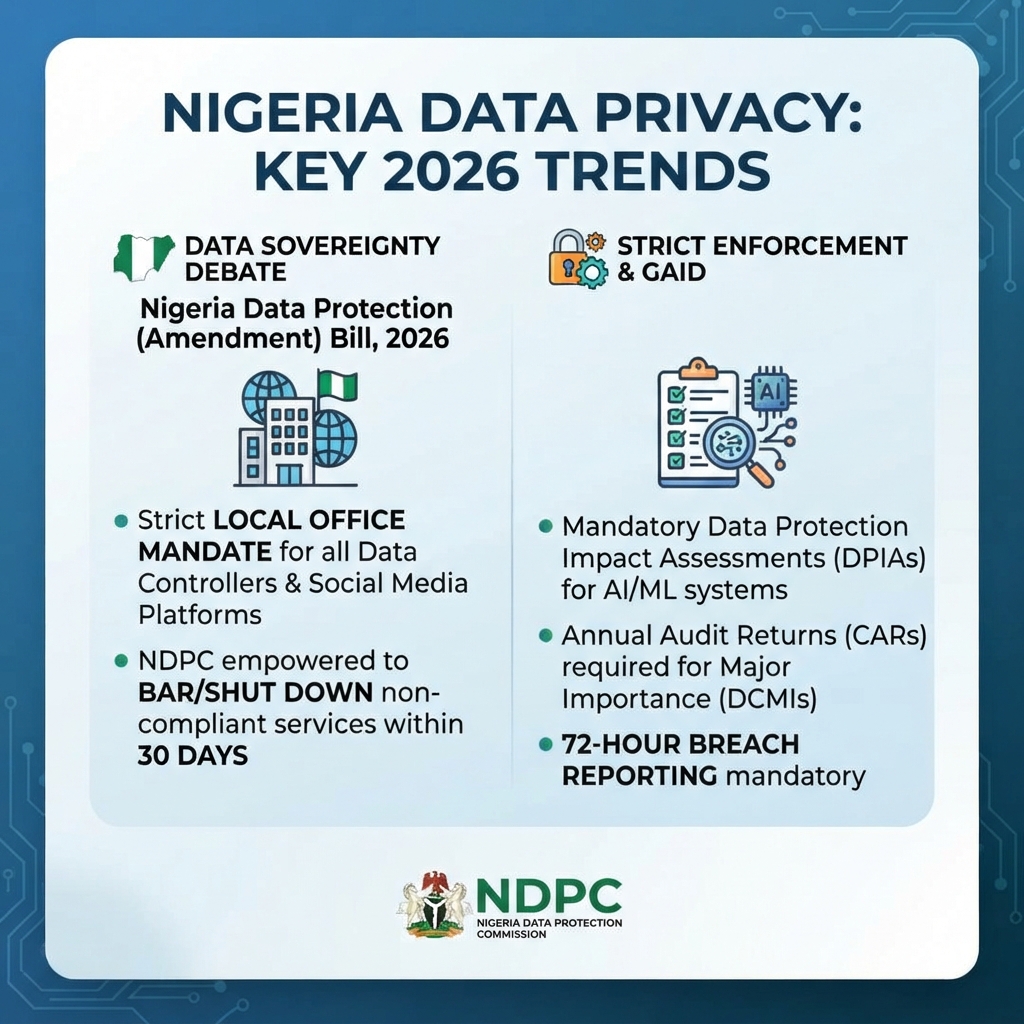
Under the Nigeria Data Protection Act (NDPA), non-compliance can result in several penalties, including:
- Fines: Organizations that fail to comply with the NDPA may be subject to fines. These fines can be substantial depending on the severity and nature of the violation.
- Imprisonment: In certain cases, individuals responsible for non-compliance may face imprisonment.
- Enforcement Actions: The Nigeria Data Protection Bureau (NDPB) has the authority to investigate and enforce compliance, which can include issuing enforcement notices and orders.
- Civil Liability: Organizations may face lawsuits from data subjects for damages resulting from non-compliance.
- Reputational Damage: Beyond legal penalties, non-compliance can lead to loss of customer trust and damage to the organization’s reputation.
It is important for organizations operating in Nigeria to understand and adhere to the NDPA requirements to avoid these penalties.
To be compliant with the Nigeria Data Protection Act (NDPA), follow these key steps:
- Understand the Regulation:
- Familiarize yourself with the NDPR which governs the processing of personal data in Nigeria.
- Data Inventory:
- Conduct a comprehensive audit to identify what personal data you collect, process, store, and share.
- Data Protection Policies:
- Develop and implement clear data protection policies and procedures that align with NDPR requirements.
- Consent:
- Ensure that you obtain explicit, informed consent from data subjects before collecting or processing their personal data.
- Data Subject Rights:
- Inform data subjects of their rights under NDPR, including access, correction, and deletion of their data.
- Data Security:
- Implement appropriate technical and organizational measures to protect personal data from unauthorized access, loss, or damage.
- Data Breach Management:
- Establish procedures for detecting, reporting, and responding to data breaches within the stipulated timeframe.
- Data Protection Officer (DPO):
- Appoint a Data Protection Officer to oversee compliance with data protection laws and serve as a point of contact.
- Vendor Management:
- Ensure that third-party service providers comply with NDPR standards through contracts and regular audits.
- Training and Awareness:
- Conduct regular training sessions for employees to raise awareness about data protection responsibilities.
- Documentation and Reporting:
- Maintain documentation of compliance efforts and be prepared to report to the National Information Technology Development Agency (NITDA) when required.
- Continuous Monitoring:
- Regularly review and update data protection practices to adapt to new legal requirements or operational changes.
By following these steps, organizations can align with the Nigeria Data Protection Regulation and protect the personal data of their customers and employees effectively.